
Three Cornell College faculty members were granted tenure and promoted to associate professor beginning this academic year.
Receiving tenure means a committee of their peers and college leaders has thoroughly evaluated their teaching, research, and service to the college. It’s a significant milestone in an academic career.
“These faculty members represent the very best of Cornell’s commitment to teaching, scholarship, and student success,” said Provost Daniel Prosterman. “Their dedication in the classroom, their engagement with students, and their contributions to their fields have a lasting impact on our campus community. We are proud to recognize their achievements.”
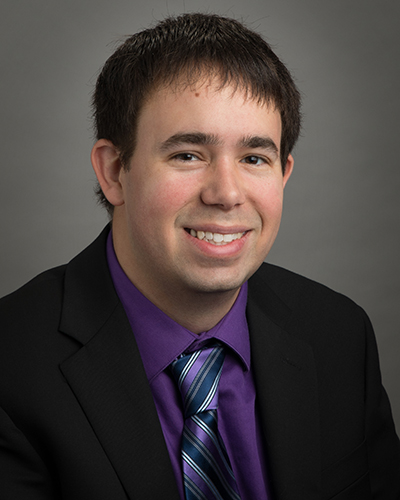
Associate Professor of Statistics Tyler GeorgeTyler George teaches undergraduate statistics and data science courses and directs the Cornell Summer Research Institute. His research spans three areas: theoretical statistics, including lack-of-fit testing in linear regression; statistics and data science education,
with a focus on increasing student engagement and improving learning outcomes; and collaborative applied projects across the liberal arts with undergraduate students and faculty. He holds a Ph.D. in Statistics and Analytics from Central Michigan University.
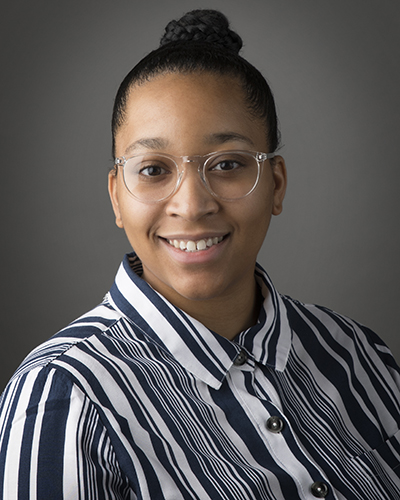
Associate Professor of Mathematics Melanie KingMelanie King has enjoyed teaching undergraduate mathematics courses at Cornell. Her interests in math education are growing, as she considers the math skills necessary to succeed in the AI era and how math knowledge can transfer to other relevant contexts, in engineering and beyond. She has also had the opportunity to work with the Cornell Summer Research Institute and the Enhancing Diversity in Graduate Education network as a speaker and summer instructor. King earned her Ph.D. in applied mathematics and computational sciences from the University of Iowa.
Associate Professor of Art Alex McKenzie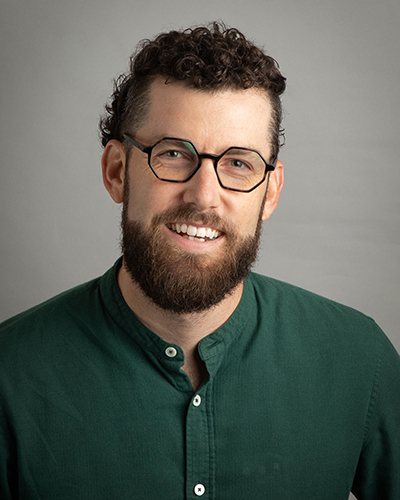
Alex McKenzie is an interdisciplinary artist and educator who teaches courses in digital art, photography, and the moving image. His creative practice draws on media archaeology and synesthetic approaches to explore relationships between sound, image, and technology. Working across print, performance, lens-based media, and installation, his current research revisits and builds upon 20th-century innovations, including optical sound and the ANS synthesizer. McKenzie’s work has been exhibited nationally and internationally at venues like the Mint Museum of Art, The Wassaic Project, and SGCI, and has appeared in publications such as New American Paintings and Emergency Index. He has received fellowships and grants from the Vermont Studio Center and the Iowa Arts Council. McKenzie holds an M.F.A. in time-based art from the University of Tennessee and a B.F.A. in painting from the University of North Carolina at Greensboro.